Modelos de Segmentación de Clientes: Tu Guía para Mayor LTV y ROAS en Shopify
Descubre modelos de segmentación de clientes que impulsan insights impulsados por IA para Shopify: aumenta LTV, ROAS y retención.
Eres fundador de Shopify, lo que significa que estás haciendo malabarismos con un millón de cosas. ¿Uno de los mayores desafíos? Tus datos están por todas partes. Shopify cuenta una historia, Google Analytics otra, y tus reportes de Klaviyo se sienten como si fueran de otro planeta. Estás invirtiendo dinero en anuncios de Meta, pero conectar ese gasto con ganancias reales se siente como adivinanza. Sabes que hay insights enterrados ahí, pero no tienes tiempo para convertirte en un científico de datos para encontrarlos.
Esta vista fragmentada lleva a marketing genérico. Terminas enviando el mismo cupón de 20% de descuento a tus fanáticos acérrimos y a tus visitantes primerizos. ¿El resultado? Gasto publicitario desperdiciado, rendimiento mediocre de campañas, y una sensación hundida de que estás dejando dinero sobre la mesa.
Deja de Hacer Marketing a Todos y Comienza a Crecer

¿Tu marketing de Shopify se siente como si hubiera alcanzado un techo? No estás solo. Muchos fundadores DTC quedan atrapados en el ciclo de ejecutar campañas amplias, esperando un jonrón pero terminando con rendimientos decrecientes y un retorno de inversión publicitaria (ROAS) confuso.
Inviertes dinero en anuncios de Meta, envías emails masivos, y cruzas los dedos, pero los resultados se sienten aleatorios. El problema no es tu producto o tu esfuerzo; es que estás tratando a cada cliente como si fuera la misma persona.
La realidad es que tu base de clientes es una mezcla de personalidades distintas. Un comprador primerizo que hizo clic en un anuncio de 20% de descuento necesita una conversación completamente diferente que un VIP que te ha comprado diez veces. Un cazador de ofertas que solo compra en tus rebajas está motivado por cosas diferentes que el superfan que compra cada nuevo lanzamiento a precio completo. Sin una forma clara de distinguirlos, tu marketing permanece genérico, y su impacto se diluye.
El Poder de Conocer Tus Grupos de Clientes
Aquí es donde entran los modelos de segmentación de clientes. En lugar de adivinar, usas tus datos de Shopify para clasificar clientes en grupos significativos. Esto es lo que mueve tu marketing de un megáfono a una conversación personal.
Este enfoque basado en datos te da la claridad para:
- Personalizar a Escala: Adapta tus emails de Klaviyo, creatividad de anuncios sociales, y ofertas en el sitio para ajustarse al viaje específico y preferencias de cada segmento.
- Aumentar Tu Rentabilidad: Enfoca tu gasto publicitario en segmentos de alto valor—aquellos más propensos a comprar de nuevo—lo que mejora directamente tu ROAS y reduce tu costo de adquisición de clientes (CAC).
- Impulsar Retención y LTV: Detecta clientes en riesgo antes de que desaparezcan y lanza campañas dirigidas de reconquista, mientras recompensas a tus mejores clientes para mantenerlos regresando por más.
Como fundador, la segmentación es tu clave para enviar el mensaje correcto a la persona correcta en el momento correcto. Es la diferencia entre construir una comunidad leal y solo procesar transacciones.
Las herramientas modernas de análisis de IA automatizan todo este proceso, convirtiendo datos dispersos de Shopify, Klaviyo, y tus plataformas publicitarias en un mapa claro y accionable de tu base de clientes. Un gran primer paso es construir una sólida estrategia de datos de primera parte para unificar esa información. Esta guía te llevará a través de los modelos esenciales que necesitas conocer, mostrándote cómo convertir los datos cotidianos de tu tienda en un motor para crecimiento sostenible.
La Evolución de Listas Manuales a Predicciones de IA
Para realmente entender por qué la segmentación moderna de clientes es un cambio de juego tan grande para las marcas de Shopify, ayuda mirar hacia atrás sobre cómo llegamos aquí. No fue hace mucho tiempo que el marketing era una calle de un solo sentido—básicamente un enfoque de "rocía y reza" donde enviabas el mismo mensaje a todos y solo esperabas que algo funcionara.
Piensa en esos anuncios clásicos de mercado masivo de la época dorada de la TV. Fueron construidos para la audiencia más grande posible, con cero segmentación. Para una marca DTC en crecimiento hoy, eso no es solo ineficiente; es una forma garantizada de quemar tu presupuesto de marketing para resultados mediocres.
De Demografía a Comportamiento
El primer cambio real llegó cuando los modelos demográficos entraron en escena. Por primera vez, las marcas pudieron moverse más allá de gritarle a todos y comenzar a dirigir su alcance. Toda esta idea se estableció en un paper fundacional de 1956 por Wendell R. Smith, quien argumentó que cortar mercados por edad, género, y ubicación podría crear una ventaja competitiva seria.
Incluso ahora, esa capa simple de segmentación sigue siendo poderosa. Un estudio reciente de McKinsey encontró que las marcas usando datos demográficos vieron un aumento de 15% en tasas de conversión, especialmente para afinar la segmentación de anuncios en plataformas como Meta.
Pero la demografía solo te dice quiénes son tus clientes, no cómo actúan. Esa brecha llevó al siguiente gran salto: segmentación comportamental. Aquí es donde modelos como análisis RFM (Recencia, Frecuencia, Monetario) se convirtieron en el arma secreta para catálogos de correo directo y marcas de eCommerce tempranas. Al rastrear acciones de clientes—cuándo compraron por última vez, qué tan seguido, y cuánto gastaron—finalmente pudiste identificar a tus mejores clientes, detectar a los que se están alejando, y enviarles la oferta correcta.
Fue una mejora masiva, pero aún un proceso totalmente manual, mirando hacia atrás. Los fundadores y mercadólogos pasaban horas enterrados en hojas de cálculo, procesando números para construir estas listas estáticas.
La Nueva Era de IA Predictiva
Ahora, estamos en la fase más emocionante aún. El surgimiento de IA y machine learning ha hecho que la segmentación predictiva—algo una vez reservado para gigantes como Amazon—sea accesible para cada marca de Shopify. En lugar de solo mirar lo que pasó en el pasado, los análisis impulsados por IA pueden realmente pronosticar lo que va a pasar después.
Las herramientas de IA de hoy no solo te dicen quiénes fueron tus mejores clientes el trimestre pasado. Predicen quiénes serán tus mejores clientes el próximo trimestre, qué grandes gastadores están en riesgo de abandonar, y qué productos es más probable que compre un nuevo visitante.
Aquí es donde la IA transforma los datos de tu tienda Shopify en una ventaja competitiva. Automatiza el procesamiento complejo de datos que solía tomar días, convirtiendo tus datos en insights que miran hacia adelante. Voltea la segmentación de una tarea reactiva a una estrategia de crecimiento proactiva, liberándote para enfocarte en lo que mejor haces: construir tu marca.
Para ver cómo funciona esto bajo el capó, revisa nuestra guía sobre análisis predictivo para eCommerce. Este cambio hace que las decisiones sofisticadas basadas en datos sean una realidad cotidiana, no solo una meta para el futuro.
Muy bien, hemos cubierto el por qué detrás de la segmentación. Ahora la parte divertida: elegir las herramientas correctas para el trabajo.
Piensa en estos modelos de segmentación menos como teorías académicas densas y más como diferentes lentes para tu cámara. Cada uno trae una parte diferente de tu base de clientes a foco nítido, revelando una pieza única de su historia y diciéndote exactamente cómo conectar con ellos.
Entonces, ¿qué lente eliges? Realmente se reduce a lo que estás tratando de lograr ahora mismo. ¿Estás cazando una victoria rápida para animar una campaña? ¿O estás jugando el juego largo, construyendo una estrategia para hacer crecer el valor de vida del cliente (LTV)?
Caminemos a través de los modelos de segmentación de clientes más poderosos para marcas DTC, comenzando con lo básico y avanzando hacia las cosas predictivas realmente geniales.
El camino del marketing masivo de vieja escuela a la hiperpersonalización moderna se trata de volverse más inteligente con los datos y más enfocado en el cliente.
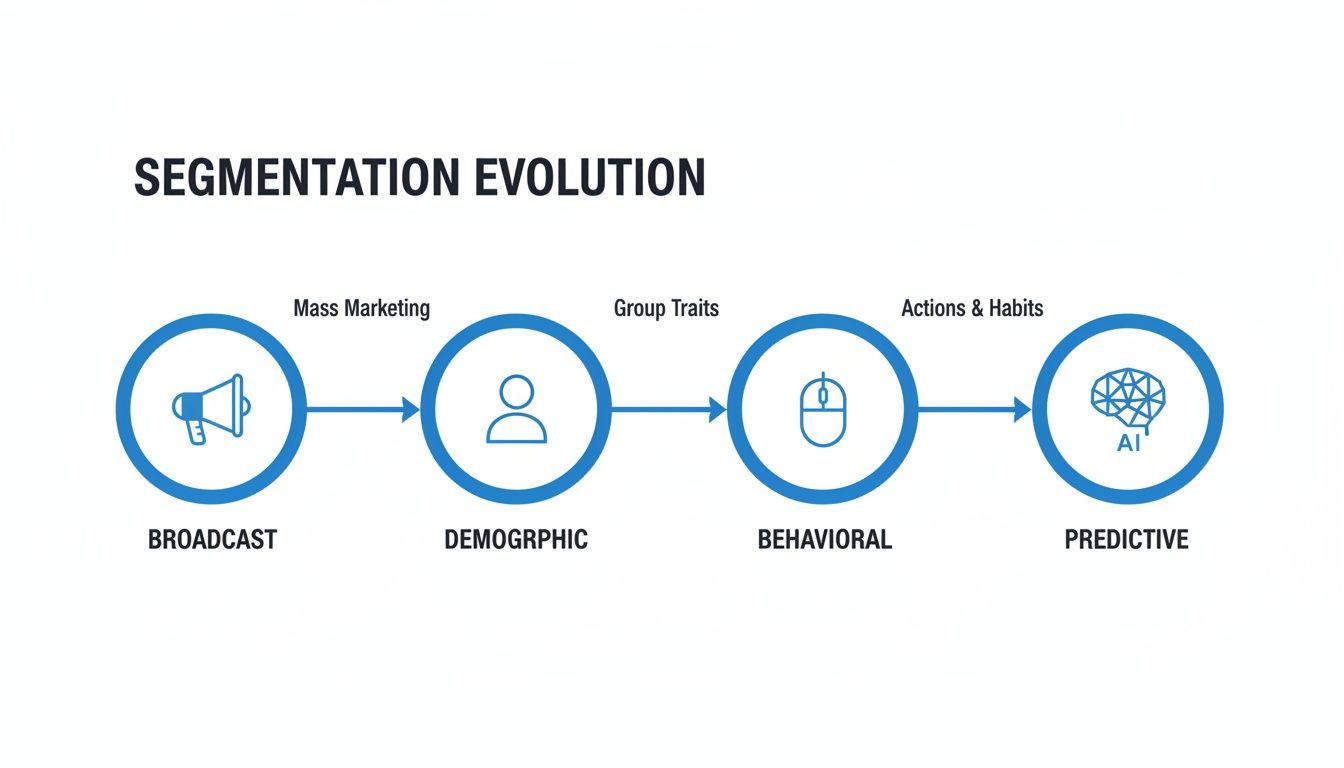
Este gráfico captura perfectamente el viaje: desde gritar a todos (difusión), hasta clasificarlos en cubetas básicas (demográfico), hasta entender sus acciones (comportamental), y finalmente, hasta saber lo que harán después (predictivo).
Para hacer aún más fácil elegir el enfoque correcto, esta tabla desglosa qué modelo se alinea con objetivos comerciales comunes.
¿Qué Modelo de Segmentación de Clientes es Correcto para Tu Objetivo?
| Objetivo del Negocio | Modelo Recomendado | Lo Que Te Dice | Ejemplo de Caso de Uso |
|---|---|---|---|
| Comenzar Rápidamente | Basado en Reglas | Quién cumple criterios específicos y simples. | Crear un segmento de "Compradores Primerizos" para enviar una serie de emails de bienvenida. |
| Mejorar Segmentación de Anuncios | Demográfico | Quiénes son tus clientes (edad, ubicación, género). | Mostrar diferentes creatividades de anuncios en Meta para clientes en climas fríos vs. cálidos. |
| Aumentar Lealtad del Cliente | Análisis RFM | Quiénes son tus mejores, en riesgo, y nuevos clientes basado en hábitos de compra. | Dirigir a tus "Campeones" con una oferta VIP exclusiva para agradecerles su lealtad. |
| Aumentar Rentabilidad | LTV (Basado en Valor) | Qué clientes serán los más rentables con el tiempo. | Gastar más en campañas de adquisición dirigidas a parecidos de tu segmento de alto LTV. |
| Reducir Abandono de Clientes | Modelo Predictivo de Abandono | Qué clientes probablemente dejarán de comprar pronto. | Enviar proactivamente un descuento especial o mensaje personalizado a clientes en riesgo. |
Ahora que tienes una guía de alto nivel, profundicemos en los detalles de cómo cada uno de estos modelos funciona en la práctica.
Modelos Fundamentales: Basados en Reglas y Demográficos
El lugar más fácil para comenzar es con segmentación basada en reglas. Es exactamente lo que suena: tú haces las reglas, tú creas los grupos. Es un enfoque completamente manual, perfecto para mojarte los pies sin necesitar herramientas sofisticadas.
Para una tienda Shopify, estas reglas podrían verse como:
- Compradores Primerizos: Clientes que han hecho exactamente una compra.
- Grandes Gastadores: Cualquiera con un valor total de orden sobre $500.
- Compradores de Producto Específico: Todos los clientes que compraron tu nuevo set de cuidado de piel más vendido.
Siguiente está la segmentación demográfica, que corta tu base de clientes por hechos objetivos como edad, ubicación, o género. Mientras no te dirá por qué alguien compra, es increíblemente útil para afinar creatividad de anuncios en plataformas como Meta, donde puedes dirigir exactamente a estos rasgos. Podrías mostrar anuncios de abrigos de invierno a clientes en Toronto y trajes de baño a aquellos en Miami. Simple, pero efectivo.
Segmentación Comportamental: Descubriendo Hábitos de Clientes
Aquí es donde la segmentación comienza a volverse realmente interesante para marcas DTC. La segmentación comportamental va más allá de quiénes son los clientes y se enfoca en lo que hacen—sus acciones e interacciones con tu tienda. Así es como comienzas a entender intención y compromiso.
La piedra angular absoluta aquí es el análisis RFM, que significa Recencia, Frecuencia, y valor Monetario. Es una forma hermosamente simple pero profundamente efectiva de puntuar a cada cliente.
RFM es como una tarjeta de puntuación de lealtad. Para cada cliente, responde tres preguntas críticas:
- Recencia: ¿Qué tan recientemente compraron? (Más reciente significa más comprometido).
- Frecuencia: ¿Qué tan seguido regresan? (Más frecuente significa más leal).
- Monetario: ¿Cuánto gastan? (Mayor gasto significa mayor valor).
Al combinar estos tres puntajes, una plataforma inteligente de análisis de IA puede crear automáticamente segmentos increíblemente poderosos, como:
- Campeones: Tus mejores clientes absolutos. Compran mucho, gastan mucho, y estuvieron justo en tu tienda.
- Clientes En Riesgo: Estas personas solían ser grandes compradores pero no han comprado en un tiempo. Necesitan un empujón.
- Clientes Nuevos: Frescos de su primera compra y listos para convertirse en habituales.
- Leales Perdidos: Clientes de alto valor que se han enfriado completamente. Es hora de una campaña de reconquista.
Esta no es una idea nueva; fue un cambio de juego para marketing directo en los 1960s y es igual de vital hoy. Para 2023, los modelos comportamentales impulsaban el 65% de campañas de marketing globales. Para tiendas Shopify, donde el abandono del carrito ronda un doloroso 70%, los segmentos comportamentales pueden recuperar 10-15% de esos ingresos perdidos. Esto importa, porque el 20% superior de tus clientes a menudo genera el 80% de tu ganancia.
Segmentación Basada en Valor y Predictiva: Mirando al Futuro
Mientras RFM mira al pasado, la segmentación basada en valor se trata de rentabilidad. La estrella de este show es el Valor de Vida del Cliente (LTV), una predicción de la ganancia total que un cliente traerá a tu marca sobre toda su relación contigo.
Segmentar por LTV te permite poner tu dinero donde está tu boca. Puedes gastar confidentemente más para adquirir clientes que se parecen a tu grupo existente de alto LTV, sabiendo que la inversión se pagará a sí misma muchas veces.
Finalmente, llegamos a la segmentación predictiva, que usa IA y machine learning para pronosticar lo que los clientes harán después. Aquí es donde las herramientas modernas de análisis te mueven de solo reaccionar a lo que pasó a moldear proactivamente lo que pasará.
Los dos modelos predictivos más importantes para cualquier marca Shopify son:
- Predicción de Abandono: Este modelo señala clientes que están mostrando signos de que están a punto de irse—antes de que realmente lo hagan. Es tu oportunidad de intervenir con una campaña de retención dirigida y salvar la relación.
- Probabilidad de Comprar: Esto identifica qué leads o clientes existentes están preparados para hacer una compra pronto, para que puedas enfocar tus esfuerzos de marketing para máximo impacto.
No hace mucho, construir estos modelos requería un equipo de científicos de datos. Hoy, plataformas como MetricMosaic hacen el trabajo pesado por ti, convirtiendo tus datos de Shopify en segmentos que miran hacia adelante sobre los que puedes actuar inmediatamente. Para una inmersión mucho más profunda sobre esto, revisa nuestra guía completa sobre segmentación de clientes RFM y cómo ponerla en práctica.
Cómo Usar Segmentación para Crecimiento Real
Muy bien, entender los diferentes modelos es una cosa. Pero convertir esos segmentos elegantes en dólares y centavos reales para tu tienda Shopify? Eso es lo que realmente importa. Aquí es donde nos ensuciamos las manos y nos movemos de teoría a acción.
Piensa en tu base de clientes como un equipo deportivo. No usarías la misma jugada para cada jugador. Tus "Campeones VIP" necesitan jugadas que recompensen su lealtad y los mantengan anotando. Tus jugadores "En Riesgo" necesitan una estrategia defensiva sólida para evitar que dejen el juego completamente.
Desglosemos el libro de jugadas.
Libro de Jugadas 1: Aumenta ROAS con Adquisición Más Inteligente
Tus segmentos de clientes de mayor valor son una mina de oro. No solo te dan negocios repetidos; son el plano para encontrar más personas como ellos. En lugar de lanzar anuncios a intereses amplios y genéricos en Meta, puedes usar tus datos para construir audiencias parecidas poderosas que realmente impulsan crecimiento rentable.
- El Objetivo: Deja de quemar gasto publicitario en tráfico de baja calidad. Comienza a adquirir clientes que están prácticamente programados para tener un LTV alto desde el día uno.
- El Segmento: Tu segmento de Alto LTV o "Campeones". Estas son las personas que compran seguido y gastan más. Una buena plataforma de análisis de IA puede identificar este grupo mirando datos de compras pasadas y puntajes predictivos de LTV.
- La Acción:
- Exporta la lista de clientes para tu segmento de Alto LTV.
- Sube esa lista directamente al Administrador de Anuncios de Meta para crear una Audiencia Personalizada.
- Construye una Audiencia Parecida del 1% desde esa lista semilla de alto valor. Esto le dice al algoritmo de Meta que vaya y encuentre nuevas personas que compartan el mismo ADN digital que tus mejores clientes.
- Ejecuta tus campañas de adquisición específicamente a esta audiencia parecida. Y no solo les lances descuentos—usa creatividad que hable del valor real de tu marca.
Cuando enfocas tu presupuesto publicitario en prospectos que reflejan a tus clientes más rentables, no solo estás esperando un mejor ROAS. Lo estás sistemáticamente diseñando, mientras reduces tu Costo de Adquisición de Cliente (CAC) general en el proceso.
Libro de Jugadas 2: Aumenta LTV y Retención con Flujos Impulsados por IA
La retención es la base de cualquier marca DTC que planee quedarse. Usando análisis RFM y modelos de predicción de abandono, puedes lanzar campañas hiper-dirigidas en una herramienta como Klaviyo que se sienten personales y oportunas. Así es como mantienes a tus mejores clientes comprometidos y traes de vuelta a los que se están desvaneciendo desde el borde.
Esto es exactamente por qué los modelos predictivos se han vuelto tan dominantes en eCommerce. De hecho, 78% de las marcas Shopify ahora los están usando para predicción de CLTV, y las campañas dirigidas a segmentos principales pueden generar un ROI de 5-7x. ¿Por qué? Porque los modelos predictivos impulsados por IA son el motor detrás de la verdadera personalización, que ha demostrado aumentar los ingresos hasta un 20% para marcas DTC.
Así es como realmente lo haces:
- El Objetivo: Reducir el abandono y exprimir más valor de vida de los clientes que ya tienes.
- Los Segmentos:
- "Clientes En Riesgo": Estas son personas con puntajes de recencia bajos en RFM o puntajes predictivos de abandono altos. El reloj está corriendo.
- "Campeones": Las estrellas con puntajes altos en Recencia, Frecuencia, y valor Monetario.
- La Acción en Klaviyo:
- Para Clientes En Riesgo: Configura un flujo automatizado de "Reconquista". Piensa en una serie de 3 emails que se activa en el momento que un cliente cae en este segmento. El primer email puede ser un simple, "Te extrañamos." El segundo podría ofrecer un descuento convincente y con límite de tiempo. ¿El tercero? Solo pide feedback.
- Para Campeones: No des por sentado a tus mejores clientes. Crea un flujo de "Apreciación VIP" que les dé beneficios como acceso temprano a nuevos lanzamientos, un regalo sorpresa con su próximo pedido, o una invitación a una comunidad privada. Así es como haces que la lealtad sea una calle de doble sentido.
Para una inmersión más profunda en hacer que esto funcione, revisa estas mejores prácticas para campañas de marketing por email que se apoyan fuertemente en mensajes adaptados a diferentes grupos de clientes.
Libro de Jugadas 3: Impulsa AOV Más Alto con Segmentos Basados en Productos
Aumentar tu Valor Promedio de Orden (AOV) es una de las formas más rápidas de impulsar ingresos sin gastar ni un centavo más en tráfico. Cuando entiendes qué productos se compran frecuentemente juntos, puedes crear ventas cruzadas, ventas adicionales, y paquetes más inteligentes que la gente realmente quiere.
- El Objetivo: Empujar a los clientes a agregar más a su carrito en una sola transacción.
- El Segmento: Segmentos Basados en Productos. Por ejemplo, "Clientes que compraron Producto A," o "Clientes que compraron tanto Producto A como Producto B."
- La Acción:
- Ejecuta un "análisis de canasta de mercado" para encontrar estos emparejamientos naturales de productos. Tus datos podrían revelar que 70% de los clientes que compran tus granos de café más vendidos también agarran tu taza de cerámica.
- Crear Paquetes: Ofrece un paquete "Ritual Matutino" en tu tienda Shopify que empareja los granos y la taza por un ligero descuento. No solo estás vendiendo productos; estás vendiendo una solución.
- Implementar Ventas Cruzadas Inteligentes: En la página del producto para los granos de café, agrega una sección "Frecuentemente Comprado Junto" mostrando la taza. También puedes usar este insight para impulsar tus ofertas de venta adicional post-compra.
Estas no son solo tácticas de una vez. Son sistemas repetibles para crecimiento. Cuando comienzas a tejer la segmentación de clientes en tus operaciones diarias, conviertes los datos de tu tienda de una hoja de cálculo pasiva en una máquina activa que impulsa ganancias.
Automatizando Segmentación con Análisis de IA
Seamos honestos. Construir segmentos de clientes en una hoja de cálculo es un rito de paso para la mayoría de fundadores de Shopify. Pero también es lento, propenso a errores, y te mantiene mirando al espejo retrovisor. Tus segmentos están básicamente desactualizados en el segundo que terminas de construirlos.
Aquí es donde una plataforma moderna de análisis de IA cambia completamente el juego. Es el acelerador definitivo, manejando el trabajo pesado de datos para que puedas volver a estrategia y acción en lugar de ahogarte en tablas dinámicas. No se requiere analista de datos.
Unificando Tus Datos para una Fuente Única de Verdad
El primer trabajo de cualquier herramienta inteligente de análisis es romper tus silos de datos. Actúa como un hub central, jalando automáticamente información de todos los lugares diferentes donde tu negocio opera:
- Shopify: El núcleo de tus datos de transacción y producto.
- Google Analytics 4: Para una imagen clara del comportamiento en el sitio y fuentes de tráfico.
- Plataformas de Marketing: Piensa en Meta Ads y Klaviyo. Esto conecta el gasto publicitario y compromiso de email de vuelta a ventas reales.
Al coser estas fuentes juntas, la plataforma crea una vista única y unificada de cada cliente. Este perfil completo es la base de segmentación poderosa, dándote la historia completa desde su primer clic hasta su décima compra.
Modelos Predictivos Sin el Código
Una vez que los datos están unificados, la magia real comienza. En lugar de que tú escribas reglas, un motor de IA usa modelos predictivos incorporados para generar automáticamente segmentos dinámicos que miran hacia adelante. Estas no son solo listas estáticas; son grupos vivientes que evolucionan mientras los comportamientos de tus clientes cambian.
Imagina preguntarle a tus datos, "Muéstrame mi top 10% de clientes por LTV predicho del trimestre pasado" y obtener una lista instantánea y accionable. Ese es el poder del análisis conversacional y predictivo—convierte preguntas complejas en claridad inmediata.
Un par de modelos predictivos clave que se ejecutan automáticamente incluyen:
- CLTV Predicho: Identifica quién va a ser tu cliente más valioso. Esto te permite enfocar tu presupuesto de adquisición y retención con precisión increíble.
- Riesgo de Abandono: Señala clientes de alto valor que están mostrando signos de alejarse, dándote una ventana crucial para intervenir y salvar la relación. Para aprender más, revisa nuestra guía completa sobre cómo los modelos de predicción de abandono pueden proteger tus ingresos.
De Insights Proactivos a Acción Inmediata
Las mejores plataformas de IA no solo te muestran datos; surgen alertas proactivas y te dicen qué hacer después. Constantemente escanean tus segmentos por oportunidades y amenazas, resaltando insights que de otra manera permanecerían enterrados en un dashboard. Esto es datos dirigidos por historia en acción.
Por ejemplo, podrías obtener una alerta: "Tu segmento 'Alto AOV, En Riesgo' ha crecido 15% esta semana. Lanza una campaña de reconquista para re-comprometerlos."
De repente, un análisis complejo se convierte en un elemento de acción simple y directo. Para marcas que buscan llevar esto un paso más allá, soluciones dedicadas de automatización de IA pueden ser el siguiente movimiento lógico. Al automatizar todo el flujo de trabajo, estas herramientas aseguran que tu marketing siempre esté dirigido a la persona correcta con el mensaje correcto, impulsando crecimiento real y sostenible.
Muy Bien, ¿A Dónde Vas Desde Aquí?
Traigamos todo esto a casa. Como fundador de Shopify, la segmentación de clientes no es algún ejercicio académico intimidante—es la palanca más poderosa que puedes jalar para crecimiento rentable.
Todo el viaje comienza admitiendo que diferentes clientes merecen diferentes experiencias. Termina cuando realmente estás entregando ese tipo de personalización, construyendo lealtad real y, por supuesto, impulsando más ingresos.
El camino hacia adelante está bastante claro: deja de adivinar y comienza a confiar en los datos. Es hora de moverse de solo aprender sobre segmentación a realmente hacerla.
La victoria real no es solo saber quiénes son tus segmentos de clientes; es lo que haces con ese conocimiento. Tomar acción es lo que separa las tiendas Shopify que prosperan de las que se quedan atrás.
Tomar ese siguiente paso—convertir los datos dispersos de tu tienda en una ventaja competitiva genuina—es más fácil ahora que nunca. Las herramientas de análisis impulsadas por IA pueden hacer el trabajo pesado por ti, liberándote para enfocarte en estrategia.
Tus clientes ya te han mostrado quiénes son y qué quieren a través de sus clics, compras, y patrones de navegación. Ahora, es tu turno de escuchar, segmentarlos, y entregar los tipos de experiencias que los mantendrán regresando por años. Comienza pequeño. Elige un segmento de alto impacto y lanza una sola campaña enfocada.
Algunas Preguntas Comunes
Incluso con las herramientas de análisis correctas, saltar a la segmentación de clientes por primera vez puede sentirse un poco intimidante. Lo entendemos. Aquí están algunas respuestas directas a las preguntas que escuchamos más seguido de fundadores de Shopify para ayudarte a comenzar con confianza.
¿Con Cuántos Segmentos de Clientes Debo Comenzar?
Es fácil caer en la trampa de crear una docena de micro-segmentos diferentes desde el inicio, pero esto usualmente solo lleva a parálisis de análisis. ¿Mi consejo? Comienza pequeño y enfocado con 3-5 segmentos centrales.
Estás buscando grupos que representen diferencias claras y accionables en tu base de clientes. Algunos puntos de partida obvios son:
- Clientes Nuevos: Personas que acaban de hacer su primera compra.
- VIPs de Alto Valor: Tus fieles incondicionales—los que compran seguido y gastan más.
- Clientes En Riesgo: Clientes una vez leales que no han regresado en un tiempo.
La meta es crear grupos significativos para los que puedas construir campañas inmediatamente. Siempre puedes agregar más complejidad una vez que le agarres el truco.
¿Puedo Hacer Segmentación de Clientes Sin una Herramienta Costosa?
Absolutamente. Definitivamente puedes comenzar manualmente. Una gran forma de meter los dedos del pie es usando los filtros de clientes propios de Shopify y exportar los datos a una hoja de cálculo para construir algunos segmentos básicos basados en reglas. Por ejemplo, es bastante simple jalar una lista de todos los que han gastado sobre $200.
La realidad, sin embargo, es que este enfoque manual se convierte en un gran sumidero de tiempo mientras tu marca escala. También te bloquea en mirar hacia atrás a datos históricos. Una plataforma de análisis de IA como MetricMosaic no solo automatiza todo el proceso sino que también unifica datos de todas tus otras herramientas (como Klaviyo y Meta) y desbloquea modelos predictivos para cosas como riesgo de abandono y LTV. Obtienes insights mucho más profundos con una fracción del esfuerzo.
¿Cuál es la Diferencia Entre Segmentación RFM y LTV?
Este es un punto de confusión realmente común, pero la distinción es crítica para tu estrategia.
RFM (Recencia, Frecuencia, Monetario) se trata de comportamiento. Puntúa clientes basado en su historial de transacciones reciente, diciéndote quién está activamente comprometido versus quién está comenzando a alejarse.
LTV (Valor de Vida) es un modelo predictivo, basado en valor. Pronostica la ganancia total que un cliente probablemente generará sobre toda su relación con tu marca. Esta es más una vista a largo plazo, estratégica para cosas como establecer presupuestos de adquisición.
Aquí está la forma simple de pensarlo: RFM te dice quiénes son tus mejores clientes ahora mismo. LTV te dice quiénes serán tus clientes más rentables con el tiempo.
¿Qué Tan Seguido Debo Actualizar Mis Segmentos de Clientes?
Tus segmentos de clientes deben ser cosas vivientes, que respiran, no instantáneas estáticas que creas una vez y olvidas. Si estás haciendo esto manualmente, re-evaluar y refrescar tus segmentos trimestralmente es una línea base sólida para la mayoría de tiendas Shopify. Asegura que tus campañas estén basadas en comportamiento relativamente actual.
Esta es otra área, sin embargo, donde las herramientas impulsadas por IA simplemente cambian el juego. Pueden actualizar tus segmentos en tiempo casi real basado en la actividad más reciente del cliente. Esto significa que tus flujos automatizados en Klaviyo pueden reaccionar instantáneamente cuando el comportamiento de un cliente cambia, lo cual es increíblemente poderoso.
¿Listo para dejar de adivinar y comenzar a crecer con precisión basada en datos? MetricMosaic es el co-piloto de crecimiento impulsado por IA para marcas Shopify que convierte datos complejos en insights claros y accionables. Unifica tu tienda, marketing, y datos de clientes para impulsar ganancia, no solo reportes.
Comienza tu prueba gratuita hoy y ve tus datos de una forma completamente nueva.