Calculadora de Margen de Ganancia para Shopify
Aprende a calcular tus márgenes de ganancia en Shopify y mejora la rentabilidad de tu tienda.
You log into your Shopify tablero, see that big, bold ingresos number staring back, and feel a jolt of excitement. Ventas are up. Crecimiento looks good. Pero then, a nagging question creeps in: how much of that did we actually keep?
For small-to-mid-size Shopify marcas, this is a universal challenge. Tus ingresos datos lives in Shopify, gasto en publicidad is siloed in Meta and Google, shipping costs are with your 3PL, and your COGS are buried in a spreadsheet. Esto fragmented datos makes it nearly impossible to answer the most crítico question in your DTC negocio: are we truly profitable? Relying on top-line ingresos alone is a trap that can lead you to escalar a negocio that's silently losing money.
Why Shopify's Tablero Hides Your True Profit
That top-line ingresos figure in your Shopify admin is seductive. It suggests momentum and success, but it’s only showing you one piece of a much larger, more complicated puzzle. The reality for most DTC fundadores is a constant battle with razor-thin margins—and often, they don’t even realize it until it's too late.
The root of the problem is manual datos crunching. Todos the costs that eat into tus ingresos are scattered across a dozen different platforms.
Your producto costs are in one place. Shipping fees from your carriers are somewhere else. Entonces tienes Shopify’s transaction fees, payment processing fees, and all your gasto en publicidad in separate dashboards. Esto disconnect makes it nearly impossible to get a clear, en tiempo real view of your profitability. Answering a simple question like, "Was our BFCM campaña profitable?" can take hours of painful spreadsheet work.

From Vanity Métricas to Accionable Margins
Without a clear, unified system, you’re flying blind. You could be scaling ad campañas that are actually tanking your ROAS. O maybe you're rushing to restock a "bestselling" producto that, once you factor in all the hidden costs, has a negative contribution margin. Esto is where impulsado por IA analítica can transform your DTC operations, replacing manual work with automatizado clarity.
To get past surface-level informes, necesitas entender the three distinct layers of profitability:
- Gross Margen de Ganancia: Esto is your starting point. It’s the ganancia left after you subtract the Cost of Goods Sold (COGS) from tus ingresos. It tells you how profitable your actual productos are.
- Contribution Margin: Esto goes a step deeper. It also subtracts variable costs directly tied to a sale, like shipping, payment processing fees, and cliente adquisición costs (CAC). Esto metric is crucial—it shows you how much ganancia each sale contributes to covering your fixed overhead.
- Net Margen de Ganancia: Esto is the bottom line. It’s what’s left after you account for all your expenses—COGS, variable costs, and fixed costs like rent, salaries, and software suscripciones. Esto is your true, final profitability.
A simple Shopify margen de ganancia calculator can give you a rough estimate, but it often fails to capture the dynamic, blended costs of a real DTC operation. True clarity comes from unifying tus datos sources with an impulsado por IA analítica platform, not just plugging numbers into a formula.
This lack of en tiempo real clarity leads to poor decisions on precios, marketing spend, and inventario management. An accurate system for calculating ganancia isn’t just a "nice-to-have" tool; it’s a crítico instrument for survival and crecimiento in the hyper-competitive world of DTC comercio electrónico. It's the difference between celebrating empty ingresos and building a sustainable, truly profitable Shopify marca.
Nailing Down Your True Cost of Goods and Shipping
To get a real grip on your Shopify margen de ganancia, tienes to start at the source: the actual cost of your productos and what it takes to get them into tus clientes' hands. Para most DTC marcas, this is where the first—and often biggest—ganancia leaks happen. A rough estimate just isn't going to cut it here.
Too many fundadores stop at the landed cost—the price they paid their supplier. Pero that's just the beginning. A find your true Cost of Goods Sold (COGS) for each SKU, tienes to account for every penny spent to get that producto sitting on your warehouse shelf, ready to be picked, packed, and shipped.
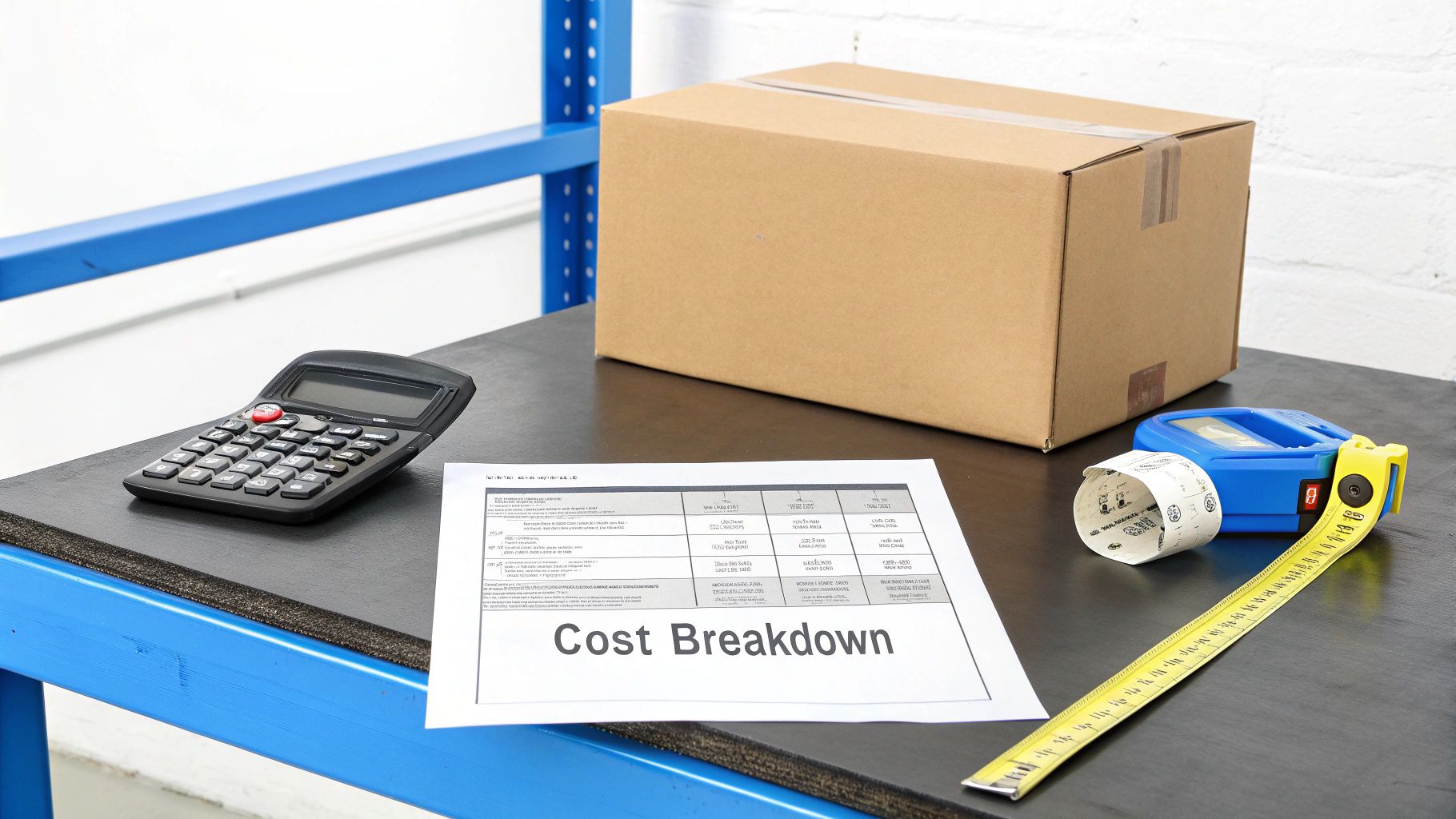
This means digging into the numbers and including all the little costs that silently eat away at your margins.
Building Your True COGS
Your actual producto cost is a blend of several different expenses. Si you don't have an automatizado system yet, seguimiento these in a spreadsheet is a tedious but esencial first step. It's a rite of passage for every growing Shopify marca.
Your COGS checklist has to include:
- Unit Manufacturing Cost: The straightforward price you pay your supplier for each item.
- Inbound Freight: The cost to ship productos from your manufacturer to your warehouse or 3PL, allocated on a per-unit basis.
- Import Duties & Tariffs: Taxes paid to bring international goods into your country. Estos can fluctuate and have a massive impact on your bottom line.
- Custom Packaging: The cost of your branded boxes, mailers, and any other custom materials that create that special unboxing experience.
Forgetting just one of these can wreck your entire profitability calculation. You'll end up thinking a producto is a winner when it's actually losing you money on every sale, hurting clave métricas like AOV and LTV.
As a fundador, tienes to shift your mindset from "Qué did the producto cost?" to "Qué did it cost to get this producto ready to sell?" The difference between those two questions is often where your margen de ganancia lives or dies.
Untangling the Shipping Cost Nightmare
Shipping is the silent killer of DTC margins. It’s not a single, fixed number; it's a dynamic, complicated expense that changes with every single pedido. Y that "free shipping" offer? It's not free—it just means you're paying for it. Accurately accounting for that cost is non-negotiable for any serious Shopify ganancia analysis.
Your real shipping cost per pedido is much more than just the price on the label. Tienes to factor in:
- Carrier Rates: The base fee from services like USPS, FedEx, or DHL, which varies by weight and destination.
- Dimensional (DIM) Weight Charges: Carriers often charge based on a package's size, not just its weight—a classic "gotcha" for marcas selling bulky items.
- Fuel Surcharges: The variable fee carriers tack on to cover fluctuating fuel prices.
- Shipping Insurance: The cost to protect yourself against lost or damaged packages.
- Pick & Pack Fees: Si you use a 3PL, this is the labor cost to fulfill each pedido.
Only by meticulously seguimiento these COGS and shipping variables can you build a reliable foundation. Esto precise, SKU-level datos is the bedrock of an accurate ganancia calculation, moving you from foggy estimates to the sharp clarity necesitas mejorar profitability and retención.
The Hidden Costs Silently Killing Your Shopify Margins
Alright, you've nailed down your COGS and shipping. You’re probably feeling pretty good, thinking tienes a solid handle on your tienda's profitability. Pero for most Shopify fundadores, this is the exact moment a second, more sneaky wave of costs starts to silently eat away at the bottom line.
These are the operational expenses and platform fees that feel like the "cost of doing negocio," but they add up faster than you think. Esto is the gray area where so many DTC marcas unknowingly leak ganancia, watching a seemingly healthy margen bruto turn into a dangerously thin margen neto. A basic ganancia calculator just won't cut it—it misses this nuance and can give you a false sense of security.
Platform and Transaction Costs
Let's start with the obvious one: Shopify. It's a fantastic platform, but its costs go far beyond your mensual suscripción. The real expenses are the variable fees tied directly to every single sale you make.
- Shopify Transaction Fees: Si you're not using Shopify Payments, you're paying a fee on every sale, anywhere from 0.5% to 2%. It’s a significant cut right off the top.
- Payment Processing Fees: Si it's Shopify Payments, PayPal, or Stripe, you're getting hit with a fee for every credit card transaction, usually around 2.9% + $0.30, which directly shrinks the cash you actually collect.
Put them together, and these two fees can easily shave 3-5% off your total ingresos before you even think about anything else.
The Operational Overhead Creep
Beyond platform fees, there's your entire operational stack. Cada app, software suscripción, and service you use is another recurrente drain on your profitability. It's death by a thousand paper cuts.
Even Shopify's own financials tell this story. According to Shopify's financial trends from recent analyses, while gross ganancia is high, operating margin is much lower, a perfect example of how significant operational expenses are. Esto is a reality every merchant on the platform faces in their own P&L.
For a growing Shopify marca, the question isn’t just "Qué did this sale make me?" but "Después all the software, fees, and returns, what did this sale cost me?" The difference is where sustainable crecimiento happens.
So, where else is the money going? Aquí are the usual suspects:
- Monthly App Suscripciones: Eso slick review app? Your email marketing platform? They all have a mensual price tag.
- Theme Costs: A one-time compra or ongoing support, your tienda's theme is a real negocio expense.
- 3PL & Fulfillment Fees: Esto is more than just the shipping label. Think pick-and-pack fees, storage costs, and even receiving fees.
- Customer Service Software: Tools like Gorgias or Zendesk are esencial for scaling, but they add to your overhead.
- Discounts and Returns: Cada descuento code is a direct hit to tus ingresos. Returns are even worse—you eat shipping costs both ways and pay for restocking.
To really get a grip on this, tienes to rastrear all these expenses. It's the only way to build a true, accionable picture of your tienda’s financial health.
Hidden Shopify Costs Eso Impact Your Ganancia Margin
| Cost Category | Specific Examples | How It Impacts Margin |
|---|---|---|
| Transaction Fees | Shopify Payments, PayPal fees, Stripe fees, Shopify transaction fees (for non-Shopify Payments users). | A direct percentage reduction on every single sale, typically 2.5% - 5% of your total ingresos. |
| Platform Costs | Monthly Shopify suscripción plan, app suscripciones (reviews, email, loyalty), premium theme costs. | Increases your fixed mensual overhead, raising your break-even point and reducing margen neto. |
| Marketing & CAC | Ad spend (Meta, Google, TikTok), influencer fees, affiliate commissions, content creation costs. | Directly impacts your Cliente Adquisición Cost (CAC), which must be recovered from the margin on each sale. |
| Fulfillment Costs | 3PL pick-and-pack fees, storage fees, packaging materials (boxes, mailers, tape), receiving fees for new inventario. | Adds variable costs to each pedido beyond just the shipping label, directly eroding your contribution margin. |
| Returns & Refunds | Return shipping labels, restocking labor, damaged/unsellable inventario, refund processing fees. | A double-hit: you lose the ingresos from the sale and incur additional costs to process the return. |
| Operational Tools | Customer service software (Gorgias, Zendesk), design tools (Canva), project management software (Slack, Asana). | Contributes to your Selling, General & Administrative (SG&A) expenses, impacting your overall net profitability. |
By itemizing every one of these expenses, puedes finally move beyond surface-level ingresos and stop margin erosion. Esto is the crítico step toward building a truly profitable DTC negocio.
How A Calcular Profitability Con Real Examples
Knowing the formulas is one thing, but the real lightbulb moment happens when you plug in your own numbers. Let's walk through two scenarios every DTC marca runs into. Esto gives you a clear framework puedes use for your own tienda, whether you’re using a spreadsheet or a dedicated Shopify margen de ganancia calculator.
Example One: A Single SKU Order
Let's say you sell a premium D2C coffee blend—we'll call it "Fundador's Fuel." A cliente buys a single bag. Aquí’s the real-world breakdown.
Revenue:
- Product Price: $25.00
Variable Costs:
- Cost of Goods Sold (COGS): $7.50 (Esto is the beans, bag, label, and inbound freight).
- Shipping & Fulfillment: $5.25 (Postage plus your 3PL’s pick-and-pack fee).
- Payment Processing: $1.03 (Shopify Payments at 2.9% + $0.30 on the $25.00 sale).
- Customer Adquisición Cost (CAC): $6.00 (Your allocated gasto en publicidad from Meta to get this one sale).
Total variable cost for this pedido comes to $19.78.
Now, we can find the Contribution Margin—the clave metric showing how much cash this sale contributes to covering your fixed costs like rent and salaries.
Contribution Margin = Total Ingresos - Total Variable Costs
$25.00 - $19.78 = $5.22
That one bag of coffee just put $5.22 in your pocket to help pay the bills, giving you a contribution margin percentage of 20.9%—a vital health metric for your producto.
Example Two: A Multi-Item Pedido Con a Discount
Now for a more realistic scenario. A cliente buys two bags of "Fundador's Fuel" and one "Artisan Mug," using a 15% off descuento code. Esto is where manual math gets messy, fast.
Revenue Breakdown:
- 2x Fundador's Fuel Bags: $50.00
- 1x Artisan Mug: $18.00
- Subtotal: $68.00
- 15% Descuento: -$10.20
- Final Ingresos: $57.80
Blended Variable Costs:
- COGS: $23.00 (Two bags at $7.50 each, plus one mug at $8.00).
- Shipping & Fulfillment: $7.50 (The package is heavier, so costs go up).
- Payment Processing: $1.98 (2.9% + $0.30 on the discounted total of $57.80).
- Customer Adquisición Cost (CAC): $9.00 (It cost a bit more to acquire a cliente with a higher AOV).
Total variable cost shakes out to $41.48.
Let's run the contribution margin calculation again.
Contribution Margin = Final Ingresos - Total Variable Costs
$57.80 - $41.48 = $16.32
While the total ganancia in dollars is higher, the margin percentage is now 28.2%. It's a much healthier margin, showing the power of increasing your Valor Promedio de Pedido (AOV) to mejorar profitability.
These examples show how every variable creates a unique ganancia signature for every pedido. It’s easy to miss these costs as they quietly eat away at your bottom line.
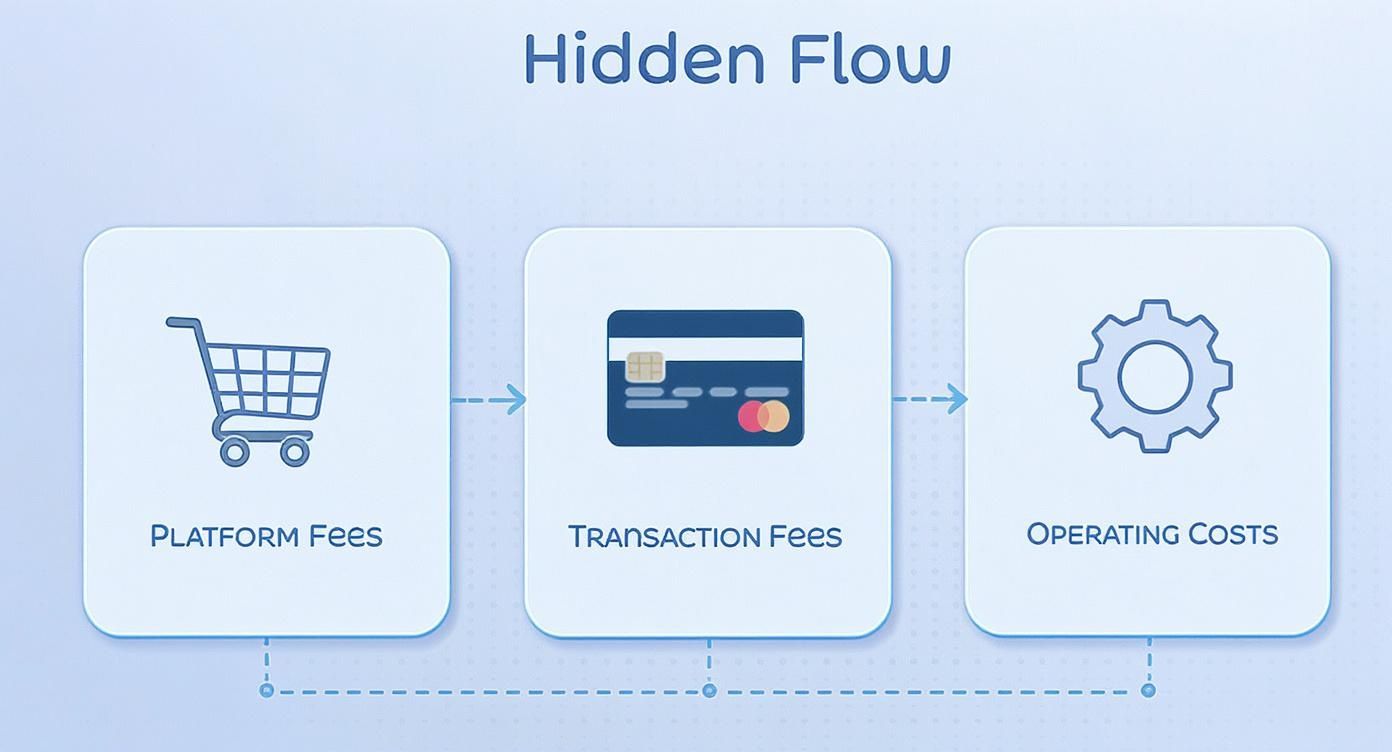
This flow from platform fees to transaction fees and operating costs shows how multiple layers of expenses are stacked against tus ingresos on every single pedido.
Automating Ganancia Información Valiosa Con AI Analytics
Look, trying to calcular ganancia margins in a spreadsheet is more than just a headache—it’s a huge liability for any growing Shopify marca. It’s slow, it’s full of human error, and by the time you’re done, the ganancia snapshot you’ve created is already stale. Como a fundador, you end up making crítico calls on gasto en publicidad and inventario with outdated datos.
This is where AI-driven analítica platforms completely change the game for DTC fundadores. Instead of you spending hours chasing down numbers, these tools act like an intelligent, always-on Shopify margen de ganancia calculator that connects all tus datos automatically.

From Manual Crunching to Automatizado Clarity
Imagine connecting all your scattered datos sources into one clean, unified view. An AI analítica tool like MetricMosaic plugs directly into:
- Your Shopify tienda for pedido and cliente details.
- Ad platforms like Meta and Google Ads to pull in your en tiempo real CAC.
- Email software like Klaviyo to medir campaña profitability.
- Your 3PL for accurate, up-to-the-minute fulfillment costs.
The AI does the heavy lifting, automatically cleaning and blending this datos to deliver en tiempo real, SKU-level profitability información valiosa. The hours you used to burn wrestling with VLOOKUPs can finally be spent on actual estrategia to mejorar ROAS, LTV, and retención.
The Shopify ecosystem has seen an explosive rise, with Shopify's incredible merchant ingresos growth creating a datos mess that manual tools can’t keep up with. Esto makes impulsado por IA analítica a necessity for DTC marcas that want to compete.
Moving De Reactive to Proactive Strategy
True clarity isn’t just about seeing yesterday's numbers faster. It’s about using datos to see what’s coming next. Esto is where the power of AI really shines, with next-gen trends like predictivo información valiosa and conversational analítica.
AI-powered analítica isn't just a better calculator; it's a strategic co-pilot. It transforms your complex tienda datos into a clear story, telling you not just what happened, but why it happened and what deberías do next.
These next-gen platforms can surface predictivo información valiosa, alerting you to which productos are seeing margin erosion or which ad campañas are about to become unprofitable. Algunos even use conversational analítica, letting you ask, "Qué was my net ganancia on the new producto launch last week?" and get an instant, accurate answer.
This automatizado intelligence gives you the confidence to optimizar precios, marketing spend, and inventario. You stop reacting to last month's P&L and start shaping next month's ganancia, turning your tienda's datos into your most poderoso competitive advantage.
A Pocos Lingering Questions on Shopify Ganancia Margins
Even with the right formulas, fundadores usually have a few lingering questions. Getting the details right is what separates a healthy Shopify marca from one that's just spinning its wheels.
What’s a “Good” Net Margen de Ganancia for a Shopify Tienda?
This is the million-dollar question, and the honest answer is: it depends. Pero a solid benchmark for a healthy Shopify DTC marca is somewhere in the 10% to 20% margen neto range.
If you’re just starting out, podrías operate at the lower end (or even at a loss) while you pour money into crecimiento. Eso's normal. More established marcas can often push past 20%. The most importante thing isn't hitting a magic number, but seguimiento your margin trends over time. Are you getting more efficient as you escalar?
How Do I Actually Calcular Margen de Ganancia Per Producto in Shopify?
You’d think this would be easy, but Shopify's native analítica don't really give you a clean way to see true, net ganancia per SKU. The manual way involves a painful process of exporting ventas datos and mashing it together in a spreadsheet with your COGS, shipping costs, transaction fees, and allocated marketing spend. A get accurate, en tiempo real información valiosa without pulling your hair out, an impulsado por IA analítica platform is the only scalable solution.
What's the Difference Entre Markup and Margen de Ganancia?
This one trips people up all the time. They are not the same thing.
Markup is a precios tool. It’s what you add to your cost to get your selling price. Si a producto costs you $50 and you sell it for $100, your markup is 100% ($50 markup / $50 cost).
Profit Margin is a profitability metric. It’s the percentage of the selling price that is ganancia. Using the same example, your gross margen de ganancia is 50% ($50 ganancia / $100 price). Markup sets the price; margin tells you how much of that price you actually keep.
Which Shopify Fees Hammer My Margen de Ganancia the La mayoría?
A few usual suspects have an outsized impact on your bottom line. Payment processing fees are a big one, since they take a slice of every single sale. Transaction fees can also add up. Beyond that, the two silent margin killers are often mensual app suscripciones and 3PL fulfillment costs. Estos are significant, recurrente expenses that can quickly erode tus ganancias if you aren't watching them like a hawk.
Stop wrestling with spreadsheets and start getting the automatizado, story-driven información valiosa necesitas crecer faster. The next step is to move from awareness to action. MetricMosaic unifies all tus datos into one clear view, turning complexity into accionable ganancia estrategias. Start your free trial today.