Behind the Build, Ep. 3
Two months of heads-down building resulted in a complete platform redesign. We also share how getting our team AI-enabled has been a major unlock for shipping fast, and why being a small team without much legacy code is suddenly looking like an advantage.
What We Shipped
It's been two months since our last episode. We've been heads-down shipping.
Platform Redesign
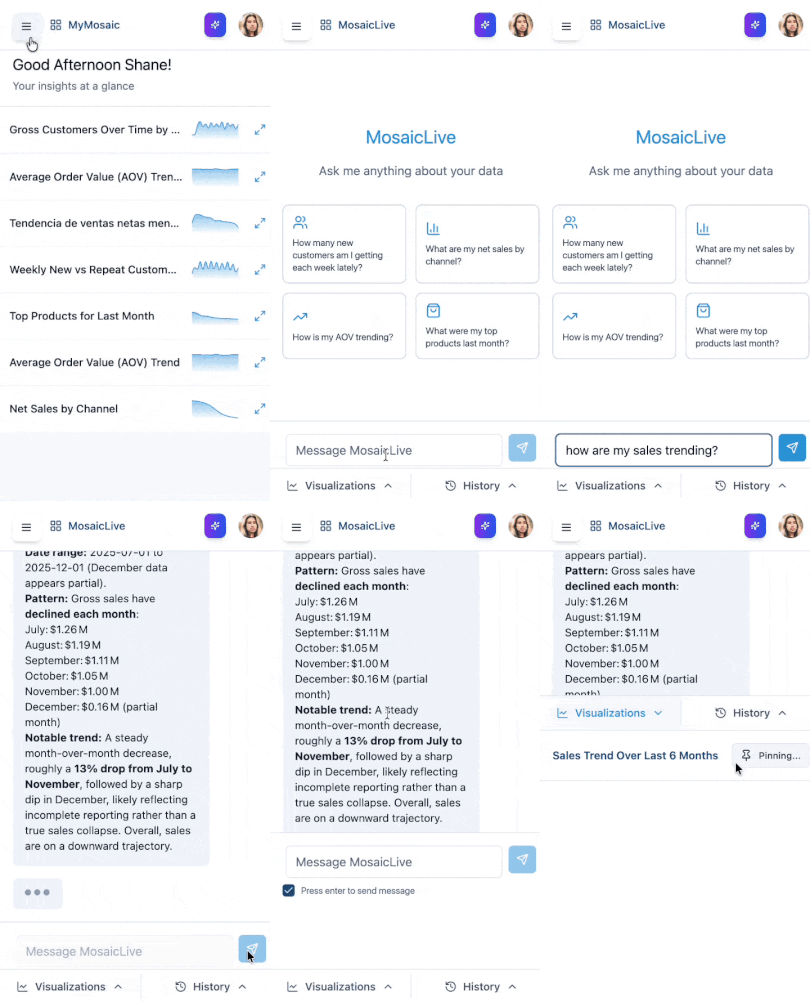
We migrated to shadcn and Tailwind CSS with a mobile-first approach. Shopify merchants aren't sitting at desks. They're at trade shows, in warehouses, on the move. The platform needed to work wherever they are.
- Mobile-first: Every dashboard, chart, and interaction works on phones and tablets.
- Faster performance: Significantly improved load times, especially for data-heavy visualizations.
- Cleaner UI: Modern navigation and drag-and-drop layouts on MyMosaic.
New Story Type: Activation Stories
In Episode 2 we launched Weekly Sales Stories. Now we've added Activation Stories, a new story type that runs automatically when a merchant completes their first historical data sync.
Instead of a generic "your data is ready, come explore" email, new users now get a personalized analysis. Right now it's configured to analyze their performance from last holiday season alongside recent trends, with specific insights and recommendations for this holiday season. We can tweak this seasonally, but the key is that merchants get pulled into the app with something actually useful, not just a notification.
MyMosaic
We shipped MyMosaic, a personalized home screen where you can pin your favorite charts and insights from MosaicLive. Found something useful in a conversation? Pin it to your dashboard for quick reference. The new mobile-optimized version makes this work seamlessly on phones too.
How We're Shipping This Fast
We're a small team. Getting AI-enabled internally has been a huge unlock.
We've been running workshops and enablement sessions to make sure everyone on the team is leveraging AI tools in their daily work. Claude Opus 4.5 was a turning point for us. It's good enough now that it genuinely accelerates complex development tasks, not just boilerplate.
This matters because it's changed our competitive position. A few months ago, being a tiny team felt like a disadvantage. Competitors have bigger engineering orgs and years of feature development behind them. We were late to market and far from feature parity.
Now? Those dynamics look different:
- Minimal legacy code: We don't have years of tech debt to work around. Our codebase is relatively clean and modern.
- No users to migrate: We can rebuild things properly without breaking existing workflows for thousands of customers.
- Small team, high leverage: Larger teams either move slowly by not adopting AI, or they adopt it and face massive disruption with layoffs and retraining. We're already there.
- Fast iteration: We can turn on a dime. No committees, no lengthy approval processes.
The product feature gap that felt insurmountable six months ago is now something we can close fast. Our "weaknesses" are starting to look like advantages if we play it right.
What's Next
More story types, more business intelligence modules, customer retention insights, campaign post-mortems. More data connectors. Continued mobile refinements. Improvements to MosaicLive performance via dynamic python execution. And we're building out our marketing funnel, which I'll cover in the next episode.
If you want to see what we've built, try the 14-day free trial.
Shane
CEO & Co-Founder, MetricMosaic